
In Cemify’s mapping system, we have the option to map cemeteries at different levels of detail depending on the needs of the cemetery and the materials available.
Ideally, our goal is always to get a cemetery mapped down to the grave level. This means creating a shape for every individual grave / interment space. With this level of detail, it becomes very easy to see exactly who is buried where, as well as who owns each space. It’s the most precise and most intuitive way to manage records over time.
That said, this level of mapping isn’t always feasible. In some cases, the underlying records don’t clearly define individual grave spaces. In others, the layout is highly variable or unique from lot to lot, which can make grave-by-grave mapping significantly more time-intensive and costly.
Because of this, we also offer lot-level mapping as an alternative.
To understand the difference, let’s walk through a couple of examples.
Grave-Level Mapping (More Detailed)
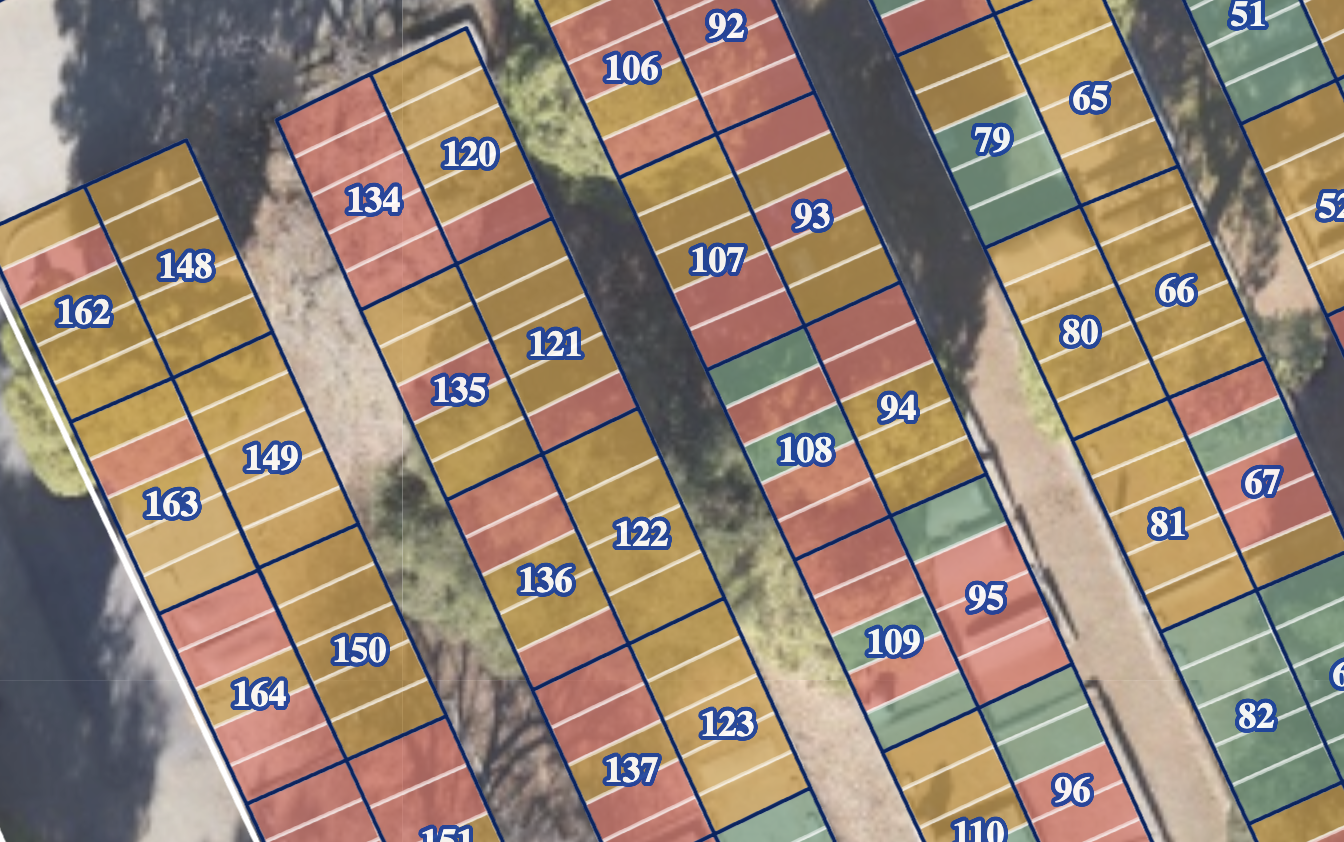
In this example, each lot is subdivided into its individual grave spaces within Cemify. The layouts are generally consistent, which makes it straightforward to map each interment space one by one.
With this approach, you can visually see exactly where each burial is located and tie ownership and records directly to a specific grave on the map.
Lot-Level Mapping (More Simplified)
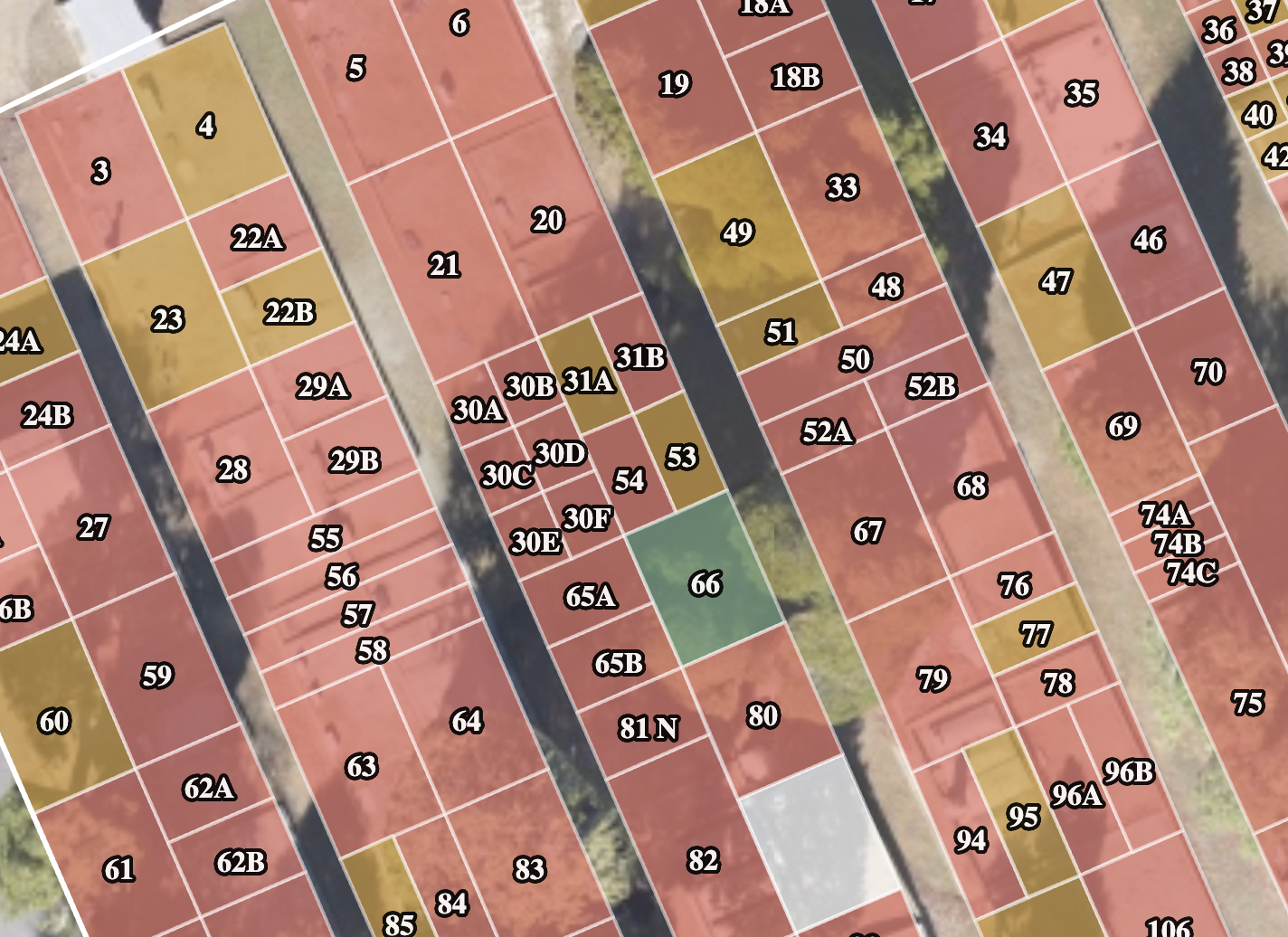
In this example, each lot is represented by a single shape, while individual grave level detail can be accessed by clicking on the lot:
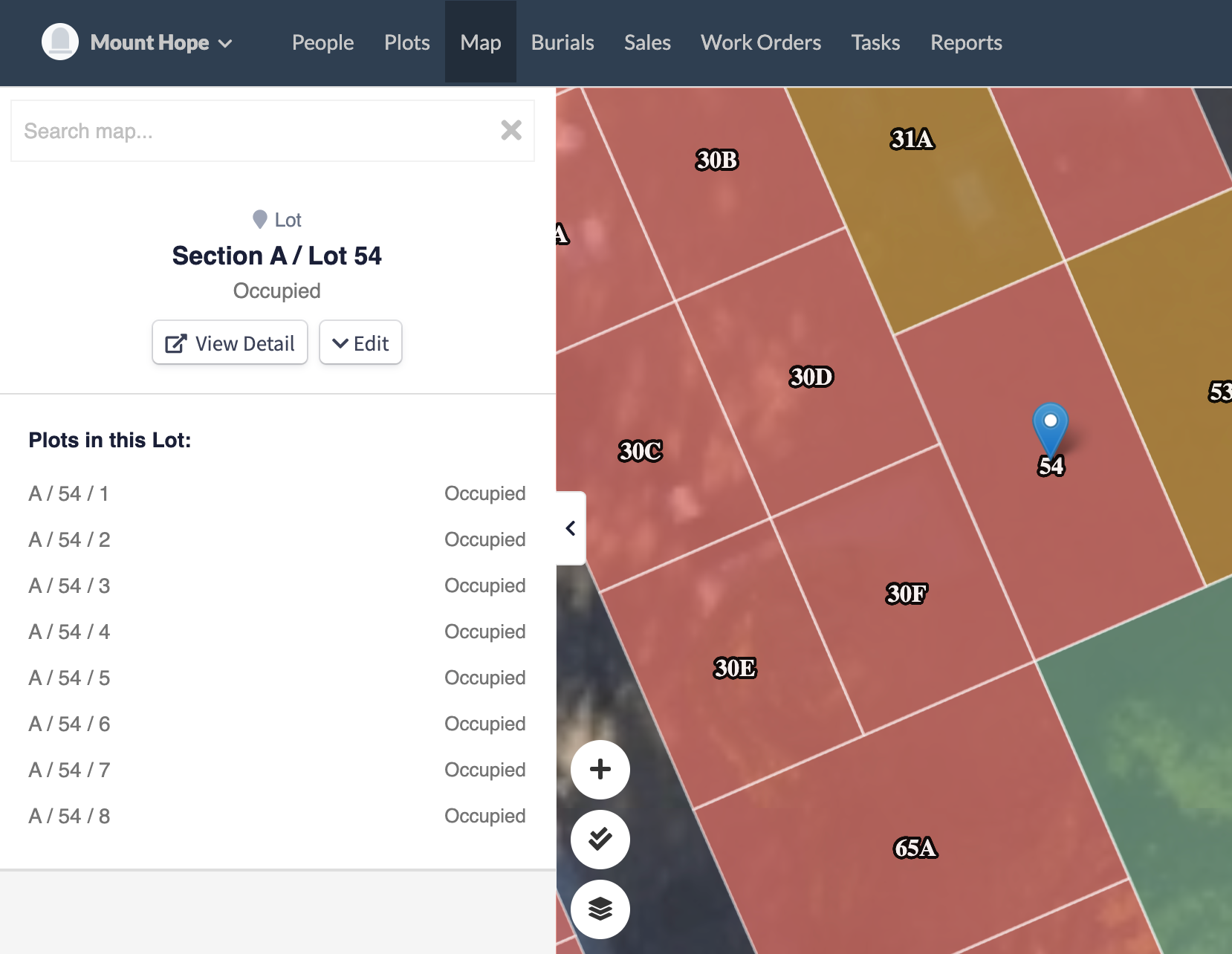
Note here that you can still track all of the same underlying information in Cemify, including burials and ownership for specific plots within each lot. The difference is that those individual spaces (in the example above, spaces 1 through 8) are not visually mapped one by one, which keeps the mapping process simpler and more cost-effective.
Deciding Between Grave-Level and Lot-Level Mapping
In general, grave-level mapping tends to make the most sense in situations where:
- Sales are actively happening and staff need to quickly identify and show available spaces
- The cemetery has fairly consistent layouts or professional maps that clearly define grave spaces
On the other hand, lot-level mapping is often a better fit when:
- Lots are uniquely laid out and don’t follow a consistent structure
- The number and arrangement of grave spaces varies significantly from lot to lot
- The available records don’t clearly define individual graves
- Keeping the project more affordable is an important consideration
Both approaches work well within Cemify. The right choice just depends on your specific situation, and in many cases, cemeteries will use a mix of both or refine certain areas over time.
If you’re not sure which approach makes the most sense for your cemetery, feel free to reach out. We’re always happy to take a look at your materials and help you think through the best option.